
Bookkeeping Basics: How to Organize Income and Expenses for a Small Business in the United States
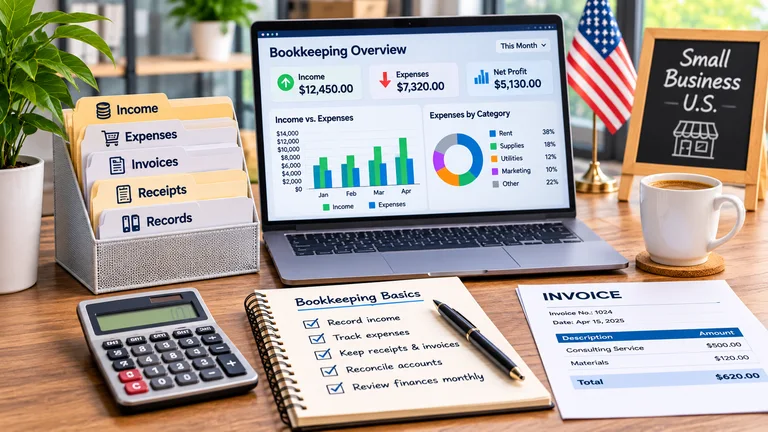
Do you own a small business in the United States and want to gain better control of your finances?
Bookkeeping is the process of recording and organizing a business's financial transactions, including sales, income, expenses, money received, and payments made.
Keeping accurate, up-to-date records helps you understand your business's financial position, make better decisions, and organize the information needed to meet your tax obligations.
1. Why Is Bookkeeping Important?
Well-organized financial records help you:
- Understand how much money comes into and goes out of your business.
- Identify and control expenses.
- Track outstanding customer payments and unpaid bills.
- Evaluate your business's financial performance.
- Prepare financial reports and tax returns more easily.
The Internal Revenue Service (IRS) requires businesses to maintain adequate records that clearly show their income and expenses.
2. How Can You Start Organizing Your Finances?
You can get started with four simple steps:
Step 1. Separate personal and business finances.
Use a business bank account when appropriate, and avoid mixing personal expenses with business transactions.
Step 2. Organize your documents.
Keep invoices, receipts, payment records, and bank statements. These documents support your financial transactions.
Step 3. Record your transactions.
Write down the date, description, category, and amount of each transaction. You can start with a spreadsheet or use accounting software that meets your business needs.
Step 4. Review your records monthly.
Compare your records with your bank statements, identify any differences, and prepare a summary of your income and expenses. This process is known as bank reconciliation.
3. Practical Example
Imagine you own a small service business in the United States and record the following transactions during one month:
| Transaction | Amount |
|---|---|
| Payments received for services | $2,000 |
| Rent paid | $500 |
| Supplies paid for | $200 |
| Internet service paid | $100 |
| Difference between cash received and payments made | $1,200 |
In this simplified example, the business received $2,000 and made payments totaling $800.
The difference is $1,200, based only on these transactions.
Important: This amount does not necessarily represent the business's actual profit or taxable income. Additional records and accounting adjustments may be needed to determine those figures.
4. What Common Mistakes Should You Avoid?
Some of the most common bookkeeping mistakes include:
- Mixing personal and business expenses.
- Failing to record certain transactions.
- Losing invoices and receipts.
- Not reconciling records with bank statements.
- Confusing available cash with actual business profit.
Remember that not every payment made by a business automatically qualifies as a tax-deductible expense.
Conclusion
Keeping accurate records of your income and expenses is essential to managing your business effectively.
You do not need complicated tools to get started. What matters most is recording transactions correctly, keeping supporting documents, and regularly reviewing your financial results.
Keep Learning with REDTUTOR.
Our Knowledge and Development Center provides educational resources to help strengthen your accounting, financial, and business management skills.
Would You Like to Learn More?
At REDTUTOR, we want to help you better understand how to organize and manage your business finances.
If you have questions about this topic or would like to learn more about our guidance and training options, contact us. We will be happy to assist you.
Educational Disclaimer: This article provides general information. Accounting and tax requirements may vary depending on the type of business, its legal structure, and applicable federal, state, and local regulations.